
Business Analysis Training Classes in Elizabeth, New Jersey
Learn Business Analysis in Elizabeth, NewJersey and surrounding areas via our hands-on, expert led courses. All of our classes either are offered on an onsite, online or public instructor led basis. Here is a list of our current Business Analysis related training offerings in Elizabeth, New Jersey: Business Analysis Training
Business Analysis Training Catalog
Course Directory [training on all levels]
- .NET Classes
- Agile/Scrum Classes
- AI Classes
- Ajax Classes
- Android and iPhone Programming Classes
- Azure Classes
- Blaze Advisor Classes
- C Programming Classes
- C# Programming Classes
- C++ Programming Classes
- Cisco Classes
- Cloud Classes
- CompTIA Classes
- Crystal Reports Classes
- Data Classes
- Design Patterns Classes
- DevOps Classes
- Foundations of Web Design & Web Authoring Classes
- Git, Jira, Wicket, Gradle, Tableau Classes
- IBM Classes
- Java Programming Classes
- JBoss Administration Classes
- JUnit, TDD, CPTC, Web Penetration Classes
- Linux Unix Classes
- Machine Learning Classes
- Microsoft Classes
- Microsoft Development Classes
- Microsoft SQL Server Classes
- Microsoft Team Foundation Server Classes
- Microsoft Windows Server Classes
- Oracle, MySQL, Cassandra, Hadoop Database Classes
- Perl Programming Classes
- Python Programming Classes
- Ruby Programming Classes
- SAS Classes
- Security Classes
- SharePoint Classes
- SOA Classes
- Tcl, Awk, Bash, Shell Classes
- UML Classes
- VMWare Classes
- Web Development Classes
- Web Services Classes
- Weblogic Administration Classes
- XML Classes
- ASP.NET Core MVC, Rev. 8.0
19 October, 2026 - 20 October, 2026 - RED HAT ENTERPRISE LINUX AUTOMATION WITH ANSIBLE
9 November, 2026 - 12 November, 2026 - OPENSHIFT ADMINISTRATION
19 October, 2026 - 21 October, 2026 - AWS Certified Machine Learning: Specialty (MLS-C01)
2 November, 2026 - 6 November, 2026 - RED HAT ENTERPRISE LINUX SYSTEMS ADMIN II
2 November, 2026 - 5 November, 2026 - See our complete public course listing
Blog Entries publications that: entertain, make you think, offer insight
One of the most recent updates to the iPhone, and more specifically the operating system that is packaged with the iPhone, iOS, brought one of the most fantastic and phenomenal updates ever: an update to Maps. Maps has been used as an application that provides an easy way to find routes, and (obviously) maps about certain areas, businesses in the local vicinity, and also leaving pins on favorited locations, or pins where you have explored, and for many other reasons. However, although Maps has always been a great way to travel with, it has always been redundant to travel with, also. When you used Maps a while ago, you had to route your map, and then manually click each next button as you reached each turn or freeway exit, and the like. So, if you had to turn left on a certain street, you had to tell your phone you had done so, so it would give you the next directions. As a result, it could become very dangerous to always have your phone out, looking at it, while you are on a high-speed freeway. But, the newest update solved that, and brought a great amount of new features.
Using Maps GPS
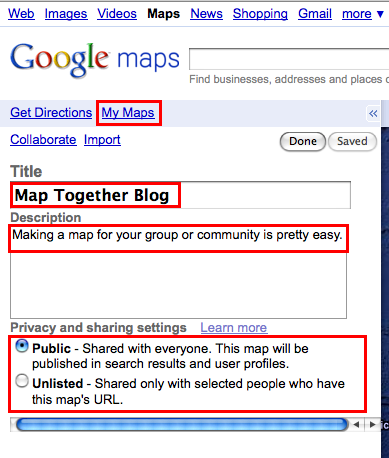
Using Maps is as easy as it gets. Most of the time, when you are using Maps, you are using it to search for a location, and finding a way to get there. To start off, let’s search for the nearest mall, and routes to get there. Simply search a nearby mall you know about, or search the general word “mall” by tapping on the top text box, and typing in mall, and searching. Pins will drop down on the screen, and locating the mall by zooming into certain streets and locations will help you find the mall you want. Once you find the mall you desire to go to, click on the blue arrow, and scroll down, and tap on the button that says “Directions To Here.”
As a result of tapping on that particular button, a new window should show up asking where your starting location is. On default, this location is your current location; if it is anything else, simply type in the starting location into the top address bar, such as your house. Once you are ready to go, tap on route, and you should be ready to go. Well, not exactly. One of the best features that has been implemented in the new system is suggested routes, and alternative routes. If you don’t like to drive on certain streets, or roads, the system provides you with different methods to get to your destination, which may avoid a road you don’t feel like driving on that certain day, or time, or you simply don’t want to take the freeway. It’s all okay, as Maps provides you with many different routes to take. Once you find the route you want (by tapping on the certain route’s outline), click start, and you should be ready to go. Make sure you turn up your volume so you can hear the directions!
Maps for Alternative Transportation
 Google is one of the most popular websites in the entire world that gets millions of views each day. Therefore, it should come as no surprise that it needs a strong and reliable programming language that it can rely on to run its searches and many of the apps that Google has created. Because of this, Google uses Python to ensure that every time a user uses one of their products, it will work smoothly and flawlessly. That being said, Google uses Python in a variety of different ways, outlined below.
Code.Google.Com
Since its creation, Google has always used Python as part of its core for programming language. This can still be seen today considering the strong relationship the two have with one another. Google supports and sponsors various Python events, and Python works to better itself so that Google remains on top of cutting edge material. One way that they do this is by working with code.google.com. This is the place where Google developers go to code, learn to code and test programs. And with it being built on Python, users can experience exactly what it is that they should expect once they start using the real site.
Google AdWords
Google AdWords is a great way for people to get their websites out there, through the use of advertising. Each time a person types in a certain string of keywords, or if they have history in their cookies, then they’ll come across these AdWords. The way that these AdWords are broadcasted to online web surfers is built on the foundation from Python. Python also helps clients access their AdWord accounts, so that they can tailor where they want their advertisements to go.
Beets
If you have loads of music, but some of it is uncategorized or sitting in a music player without a name or title, Beets is for you. This Google project uses Python and a music database to help arrange and organize music. The best part about Beets is that even if it doesn’t run exactly the way that you want, you can use a bit of Python knowledge to tailor it to be more specific to your desires.
Android-Scripting
Not only does Google run off Python, but Android also has its own value for the language. Whether you are someone who is just creating your own app for your phone or if you are someone who is looking to create the next app that gets downloaded multiple millions of times, you can use Python and Android-Scripting to create an app that does exactly what you want it to do.
YouTube
YouTube one just started as a video viewer on its own, but is now a billion-dollar company that is owned by Google. YouTube uses Python to let users view and upload video, share links, embed video and much more. Much like Google itself, YouTube relies heavily on Python to run seamlessly for the amount of traffic it gets daily.
Python is not your average coding language. Instead, it is a valuable and integral part of some of the biggest websites in the world, one of which is Google. And the resources listed here are just a fraction of what Google uses Python for in total.
Related:
What Are The 10 Most Famous Software Programs Written in Python?
The Future of Java and Python
Ranking Programming Languages: Which are Gaining Popularity?
Top 10 Software Skills for 2014 and Beyond
Working With Strings In Python
Working With Lists In Python
Conditional Programming In Python
Due to the advancements in technology, teens and adults alike can now partake in virtual worlds thanks to video games. Video games are enjoyed as a hobby all over the globe, but some gamers have made it their career with help from the ever-growing e-sport community. This is an inside look at the professional level of gaming from an ex-MLG participant, and what I remember going through when starting to play video games at an elite level.
One of the premiere and most popular leagues within the United States happens to be Major League Gaming or MLG for short. This is a league that usually involves more of the most recent games out, and they create circuits for each major title and its subsequent releases. Two of the most major game circuits within the MLG league were the Halo series and the Call of Duty series, both which happened to be first person shooters (FPS). There were a potential hundred or so teams within each circuit, but much like other competitions, the circuits were ran with winner’s brackets and losers brackets. This means that out of all the teams that would show up to MLG events, about the top eight of each bracket would really be known as the "elite" players. I personally played in the Gears of War circuit at venues like MLG Raleigh and MLG Toronto, and we had very few teams compared to Call of Duty and Halo. The amount of participants at each event usually varies in each circuit based on the popularity of the game being played.
When you win tournaments, the payouts are split between the team members. This means that looking at playing in the MLG for a life career is an ill-advised move. The cost to get to events and buy team passes usually negates the prizes you win most of the time, considering by the time that the prize money is split you are left with about $800 in a popular circuit (Like Call of Duty). The payouts are usually only high in special and certain occasions, one for example being the million dollar showdown that Infinity Ward hosted for Call of Duty: Modern Warfare 3 a couple years back. The way that players that make professional gaming their career get the big money now is by being sponsored by the big companies that back the league like Red Bull and Hot Pockets. MLG players like "Walshy" and "FeaR Moho" were sponsored early on in the league and were able to make a living off of the games they played. I would imagine them getting around $60K in a good year off of sponsors alone. I would go even as far as to say that if you do not have a sponsor in e-sports, you will not be financially successful in the career.
Being an MLG gamer requires passion and understanding for the games. If you just want to make money, then you are better off working at McDonalds.
How to Keep a Start Up Team Motivated?
What People Should Know Before Getting Rid of Old Tech Stuff
Surprising Ways Viruses, Malware, Etc. are Infecting Computers
Tech Life in New Jersey
| Company Name | City | Industry | Secondary Industry |
|---|---|---|---|
| HCB, Inc. | Paramus | Retail | Office Supplies Stores |
| Wyndham Worldwide Corp. | Parsippany | Travel, Recreation and Leisure | Hotels, Motels and Lodging |
| Realogy Corporation | Parsippany | Real Estate and Construction | Real Estate Agents and Appraisers |
| Church and Dwight Co., Inc. | Trenton | Manufacturing | Manufacturing Other |
| Curtiss-Wright Corporation | Parsippany | Manufacturing | Aerospace and Defense |
| American Water | Voorhees | Energy and Utilities | Water Treatment and Utilities |
| Cognizant Technology Solutions Corp. | Teaneck | Computers and Electronics | IT and Network Services and Support |
| The Great Atlantic and Pacific Tea Co. - AandP | Montvale | Retail | Grocery and Specialty Food Stores |
| COVANCE INC. | Princeton | Healthcare, Pharmaceuticals and Biotech | Pharmaceuticals |
| K. Hovnanian Companies, LLC. | Red Bank | Real Estate and Construction | Architecture,Engineering and Design |
| Burlington Coat Factory Corporation | Burlington | Retail | Clothing and Shoes Stores |
| GAF Materials Corporation | Wayne | Manufacturing | Concrete, Glass, and Building Materials |
| Pinnacle Foods Group LLC | Parsippany | Manufacturing | Food and Dairy Product Manufacturing and Packaging |
| Actavis, Inc | Parsippany | Healthcare, Pharmaceuticals and Biotech | Pharmaceuticals |
| Hudson City Savings Bank | Paramus | Financial Services | Banks |
| Celgene Corporation | Summit | Healthcare, Pharmaceuticals and Biotech | Biotechnology |
| Cytec Industries Inc. | Woodland Park | Manufacturing | Chemicals and Petrochemicals |
| Campbell Soup Company | Camden | Manufacturing | Food and Dairy Product Manufacturing and Packaging |
| Covanta Holding Corporation | Morristown | Energy and Utilities | Energy and Utilities Other |
| New Jersey Resources Corporation | Wall Township | Energy and Utilities | Gas and Electric Utilities |
| Quest Diagnostics Incorporated | Madison | Healthcare, Pharmaceuticals and Biotech | Diagnostic Laboratories |
| Rockwood Holdings Inc. | Princeton | Manufacturing | Chemicals and Petrochemicals |
| Heartland Payment Systems, Incorporated | Princeton | Financial Services | Credit Cards and Related Services |
| IDT Corporation | Newark | Telecommunications | Wireless and Mobile |
| John Wiley and Sons, Inc | Hoboken | Media and Entertainment | Newspapers, Books and Periodicals |
| Bed Bath and Beyond | Union | Retail | Retail Other |
| The Children's Place Retail Stores, Inc. | Secaucus | Retail | Clothing and Shoes Stores |
| Hertz Corporation | Park Ridge | Travel, Recreation and Leisure | Rental Cars |
| Public Service Enterprise Group Incorporated | Newark | Energy and Utilities | Gas and Electric Utilities |
| Selective Insurance Group, Incorporated | Branchville | Financial Services | Insurance and Risk Management |
| Avis Budget Group, Inc. | Parsippany | Travel, Recreation and Leisure | Rental Cars |
| Prudential Financial, Incorporated | Newark | Financial Services | Insurance and Risk Management |
| Merck and Co., Inc. | Whitehouse Station | Healthcare, Pharmaceuticals and Biotech | Pharmaceuticals |
| Honeywell International Inc. | Morristown | Manufacturing | Aerospace and Defense |
| C. R. Bard, Incorporated | New Providence | Healthcare, Pharmaceuticals and Biotech | Medical Supplies and Equipment |
| Sealed Air Corporation | Elmwood Park | Manufacturing | Plastics and Rubber Manufacturing |
| The Dun and Bradstreet Corp. | Short Hills | Business Services | Data and Records Management |
| The Chubb Corporation | Warren | Financial Services | Insurance and Risk Management |
| Catalent Pharma Solutions Inc | Somerset | Healthcare, Pharmaceuticals and Biotech | Healthcare, Pharmaceuticals, and Biotech Other |
| Becton, Dickinson and Company | Franklin Lakes | Healthcare, Pharmaceuticals and Biotech | Medical Supplies and Equipment |
| NRG Energy, Incorporated | Princeton | Energy and Utilities | Gas and Electric Utilities |
| TOYS R US, INC. | Wayne | Retail | Department Stores |
| Johnson and Johnson | New Brunswick | Healthcare, Pharmaceuticals and Biotech | Pharmaceuticals |
| Automatic Data Processing, Incorporated (ADP) | Roseland | Business Services | HR and Recruiting Services |
training details locations, tags and why hsg
The Hartmann Software Group understands these issues and addresses them and others during any training engagement. Although no IT educational institution can guarantee career or application development success, HSG can get you closer to your goals at a far faster rate than self paced learning and, arguably, than the competition. Here are the reasons why we are so successful at teaching:
- Learn from the experts.
- We have provided software development and other IT related training to many major corporations in New Jersey since 2002.
- Our educators have years of consulting and training experience; moreover, we require each trainer to have cross-discipline expertise i.e. be Java and .NET experts so that you get a broad understanding of how industry wide experts work and think.
- Discover tips and tricks about Business Analysis programming
- Get your questions answered by easy to follow, organized Business Analysis experts
- Get up to speed with vital Business Analysis programming tools
- Save on travel expenses by learning right from your desk or home office. Enroll in an online instructor led class. Nearly all of our classes are offered in this way.
- Prepare to hit the ground running for a new job or a new position
- See the big picture and have the instructor fill in the gaps
- We teach with sophisticated learning tools and provide excellent supporting course material
- Books and course material are provided in advance
- Get a book of your choice from the HSG Store as a gift from us when you register for a class
- Gain a lot of practical skills in a short amount of time
- We teach what we know…software
- We care…